Some cities you visit; Luxor you travel to on purpose. Long before your resort stirs, you slip out of Marsa Alam and head west across the desert, chasing the sunrise toward the ancient capital the Egyptians called Thebes. It's a long road — and at the end of it, three thousand years of history are waiting for exactly this day.
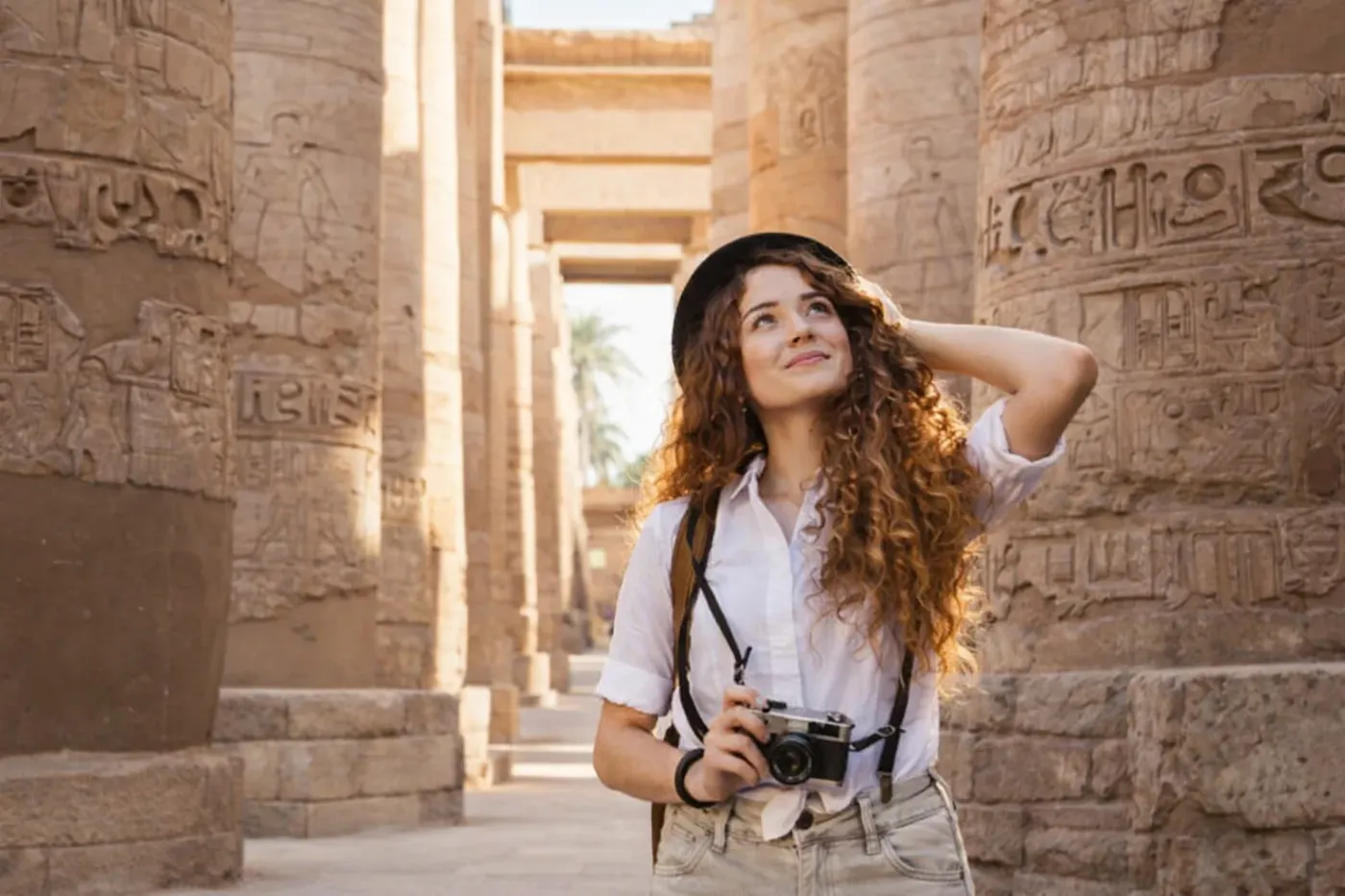
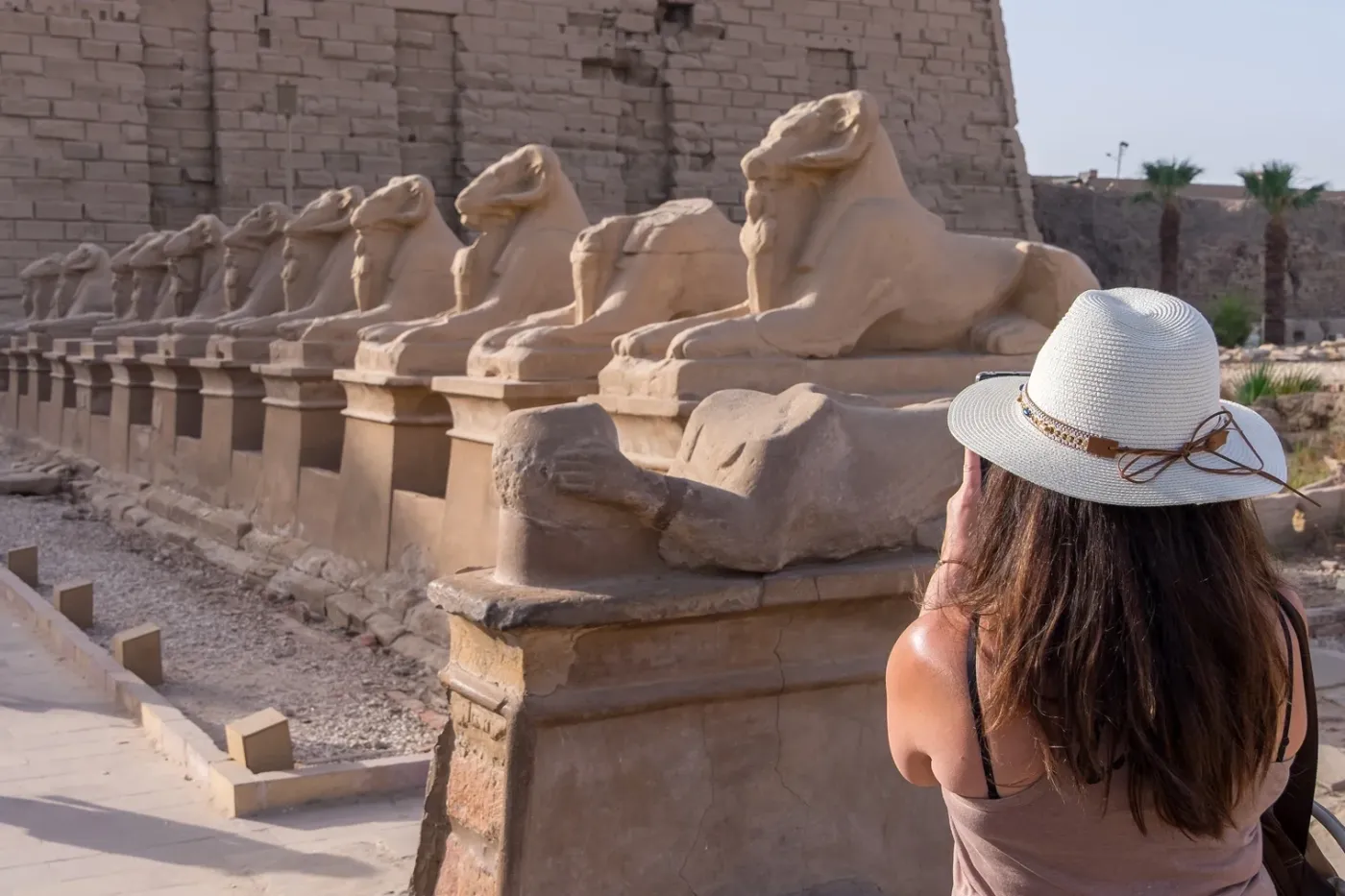
By mid-morning you walk into Karnak, and the scale rearranges something in you: a forest of stone columns so vast that people fall quiet without meaning to. Later you drift along the Nile by boat, the West Bank shimmering in the heat, before crossing into the Valley of the Kings. Here the noise of the day falls away — you descend a sloping corridor, the air cools, and the walls bloom with color: gods, boats and hieroglyphs as sharp as the day they were painted.
Then you step into the tomb of Tutankhamun himself. He was barely more than a boy when he died, forgotten for millennia until 1922, when his turned out to be the only royal tomb ever found nearly intact. Standing in that small, still chamber, the distance between his world and yours collapses. The pharaohs built for eternity because they refused to be forgotten — and here you are, remembering them.
You cross to the temple of Hatshepsut, rising in golden terraces against the cliffs, and pause beneath the Colossi of Memnon before the long road home. By the time the Red Sea lights reappear, the beach you left in the dark feels like a different country. You came for a day trip; you return carrying a piece of the oldest story humankind ever wrote down.

 8小时